
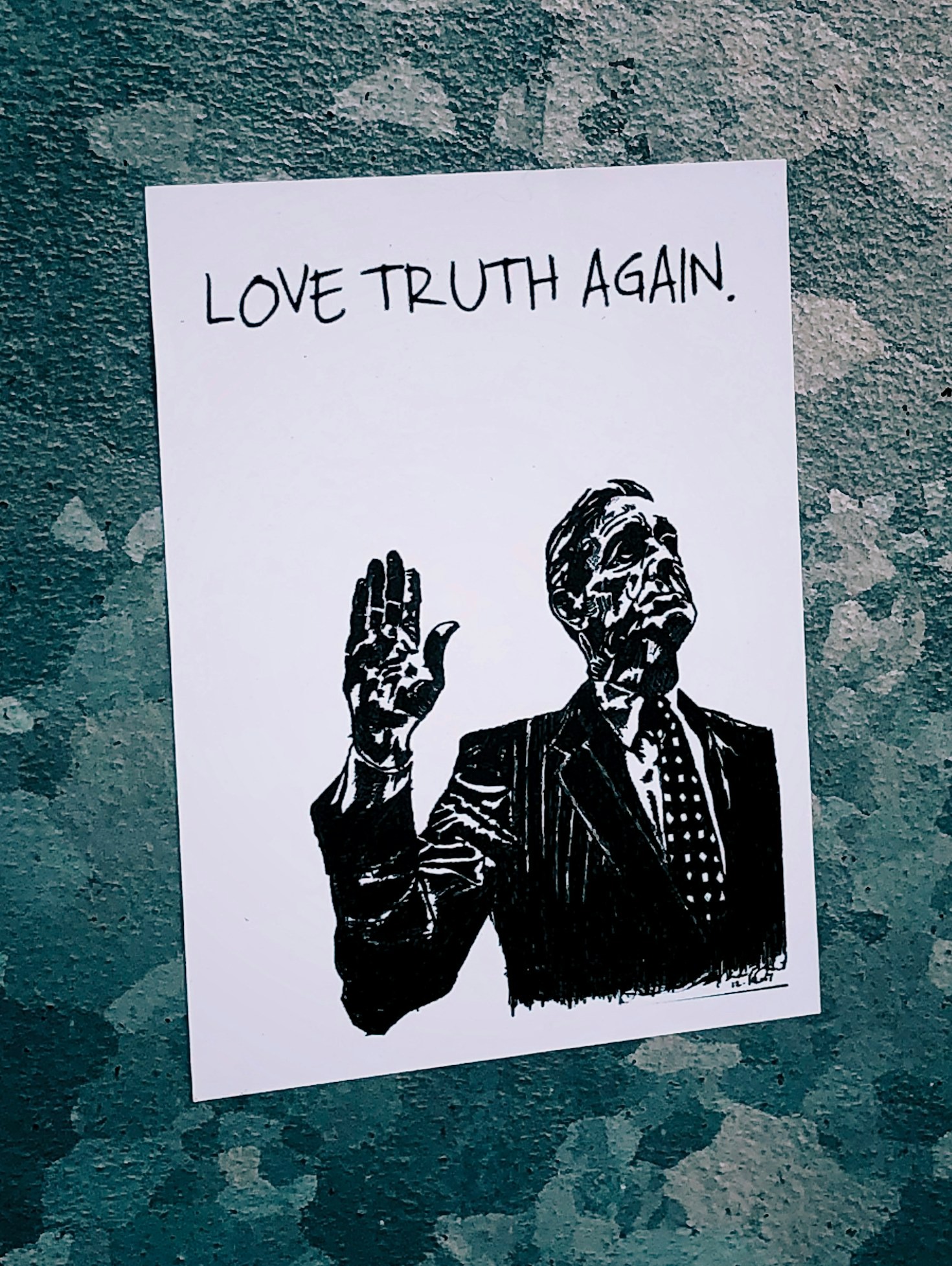
When Truth Became Negotiable
There was a time when truth was treated as something to be discovered.
It could be misunderstood, misreported, or debated—but it was assumed to exist independently of opinion. Disagreement was expected, and persuasion mattered. Facts were not immune to bias, but they were not openly disposable.
That assumption no longer holds.
In modern culture, truth has become conditional. It is filtered through ideology, shaped by incentives, and enforced by social pressure. What matters now is not whether something is true, but whether it is acceptable.
This shift did not happen suddenly. It happened gradually, quietly, and with the cooperation—often unintentional—of institutions once trusted to pursue truth rather than manage perception.
Misinformation did not arrive wearing the mask of deception.
It arrived wearing the language of consensus.
From Facts to Frameworks
Modern misinformation rarely relies on outright falsehoods. Those are too easy to challenge. Instead, it relies on frameworks—ways of interpreting reality that pre-select conclusions before evidence is examined.
Facts are allowed in, but only if they behave.
A statistic that complicates the story is dismissed as misleading. Context that challenges assumptions is labeled harmful. Questions that refuse to go away are framed as dangerous.
The result is a culture where people can have access to information and still be profoundly misinformed.
When conclusions are predetermined, evidence becomes decoration.
Consensus as a Weapon
One of the most effective tools of modern misinformation is the illusion of consensus.
When media outlets, institutions, corporations, and cultural influencers all repeat the same language, the same framing, and the same moral conclusions, dissent begins to feel irrational—even when it’s reasonable.
People don’t want to be the only one in the room who “doesn’t get it.”
Consensus creates psychological pressure. It discourages questions not through argument, but through isolation. Those who disagree are not debated—they are marginalized.
And when dissent disappears from view, agreement looks unanimous.
Uniformity is persuasive.
But it is not proof.
The Collapse of Neutrality
Neutrality once meant restraint. It meant presenting facts carefully, acknowledging uncertainty, and allowing audiences to draw conclusions.
Today, neutrality is treated as negligence.
Journalists are expected to “take a stand.” Institutions are expected to “use their platform.” Silence is framed as complicity. Objectivity is dismissed as a myth.
But when every institution adopts a moral posture, who remains to ask uncomfortable questions?
Advocacy has replaced inquiry. Messaging has replaced reporting. And misinformation thrives in the absence of restraint.
Emotion as Authority
Modern culture increasingly treats emotional response as a form of expertise.
If something feels offensive, it is assumed to be wrong.
If something feels affirming, it is assumed to be right.
If something causes discomfort, it is assumed to be harmful.
This inversion places emotion above evidence.
Policies are defended not on effectiveness, but on intent. Outcomes are secondary to feelings. And questioning emotionally framed narratives becomes a moral offense.
Misinformation does not need to convince you.
It only needs to make you afraid of disagreeing.
Why This Matters
A society that cannot distinguish between truth and approval cannot govern itself wisely.
When truth becomes negotiable, power fills the gap. Whoever controls narrative controls perception. Whoever controls perception controls behavior.
This is not a partisan observation—it is a civilizational one.
Cultures that abandon objective truth do not become more tolerant. They become more coercive. Because when truth is no longer shared, it must be enforced.
A Faith-Grounded Warning
For Christians, this moment should feel familiar.
Scripture consistently warns that truth will be suppressed—not because it is unclear, but because it is inconvenient. It warns of systems that reward conformity and punish conviction.
Truth, in the biblical sense, is not democratic.
It does not require consensus.
It requires faithfulness.
When culture abandons truth, faith becomes resistance.
The Beginning of the Unmasking
To unmask misinformation, we must first acknowledge how deeply it is embedded—not in fringe spaces, but in respected ones. Not through lies alone, but through framing, language, and silence.
The most dangerous misinformation is not what you are told that is false.
It is what you are never encouraged to question.
In the next part, we’ll examine how media and institutions—intentionally or not—became the primary enforcers of this new informational order, and why skepticism is now treated as a threat.
Media, Institutions, and the Illusion of Neutrality
For most of the 20th century, trust in institutions was built on a simple expectation: they were supposed to tell the truth, even when it was inconvenient.
Media organizations existed to inform, not persuade. Universities existed to question, not indoctrinate. Government agencies existed to administer law, not manufacture consensus. Corporations existed to produce goods, not moral instruction.
That expectation has collapsed.
Today, the same institutions that demand trust increasingly resist scrutiny. They speak with moral certainty while withholding transparency. They insist on authority while rejecting accountability. And when challenged, they respond not with evidence, but with indignation.
Misinformation thrives not because institutions lie constantly, but because they have redefined their role.
From Watchdogs to Narrative Managers
The media once prided itself on skepticism—particularly skepticism of power.
Journalists questioned government claims, challenged corporate messaging, and treated official statements as starting points, not conclusions. Errors were acknowledged. Corrections were issued. Competing perspectives were aired.
Today, much of the media sees itself not as a watchdog, but as a guardian of narrative stability.
Stories are framed not around what happened, but around what must be believed. Language is carefully curated. Headlines are emotionally loaded. Context is selectively applied. Facts that threaten the preferred storyline are buried deep—or omitted entirely.
This is not accidental. It reflects a philosophical shift: the belief that certain conclusions are too important to risk open debate.
When journalism becomes advocacy, misinformation becomes inevitable.
Uniformity as a Red Flag
One of the clearest indicators of institutional failure is uniformity of messaging.
In a free society, independent institutions should disagree. They should approach events from different angles, emphasize different facts, and arrive at different interpretations. Disagreement is a sign of intellectual health.
But when media outlets, academic institutions, corporations, and government agencies all speak in near-identical language—using the same phrases, the same moral framing, the same conclusions—something has gone wrong.
Uniformity does not arise from truth alone.
It arises from pressure.
Whether that pressure is ideological, social, or economic, the result is the same: narrative convergence replaces independent thought.
Academia and the Abandonment of Inquiry
Universities were once places where ideas were tested, not protected.
Today, many have become ideological training grounds. Dissenting views are discouraged not through debate, but through administrative power, social shaming, and professional risk. Entire lines of inquiry are declared off-limits—not because they are disproven, but because they are politically inconvenient.
Students are taught what to think long before they are taught how to think.
When institutions dedicated to inquiry begin policing conclusions, misinformation becomes credentialed.
Government Messaging and Manufactured Trust
Trust in government requires transparency.
Modern governance increasingly offers messaging instead.
Official statements are crafted to reassure, deflect, or guide behavior—not to fully inform. Data is presented selectively. Uncertainty is downplayed. Mistakes are reframed as inevitabilities. Critics are dismissed as threats rather than engaged as citizens.
This approach assumes the public cannot be trusted with the full truth.
But trust cannot be manufactured. It is earned through honesty—especially when the truth is uncomfortable.
When governments prioritize narrative control over transparency, misinformation becomes policy-adjacent.
Corporate Moralism and Cultural Enforcement
Corporations now routinely adopt moral and political positions unrelated to their products or services.
This is not driven by conviction. It is driven by risk management.
By aligning publicly with dominant narratives, corporations shield themselves from criticism, regulation, and activist pressure. Neutrality is no longer safe. Silence is interpreted as dissent.
The result is a cultural environment where economic power reinforces ideological conformity.
When corporations act as moral authorities, dissent becomes professionally dangerous.
Authority Without Accountability
Perhaps the most corrosive development is the demand for trust without verification.
Institutions increasingly insist:
- Trust the experts
- Trust the science
- Trust the process
But when questioned, they resist transparency. Data is withheld. Methodologies are obscured. Decisions are justified by authority rather than evidence.
Expertise is not the problem.
Unquestionable expertise is.
In a healthy society, authority invites scrutiny. In a failing one, authority demands obedience.
Skepticism Rebranded as Threat
Historically, skepticism was considered a virtue.
Today, it is treated as subversion.
Those who question official narratives are labeled dangerous, irresponsible, or extreme—even when their questions are reasonable and evidence-based. Motives are attacked when arguments cannot be refuted.
This rebranding of skepticism serves one purpose: to shut down inquiry without engaging it.
When asking questions becomes controversial, misinformation no longer needs to defend itself.
Faith and the Limits of Human Authority
From a Christian perspective, this moment exposes a fundamental error: the belief that human institutions are capable of moral perfection.
Scripture warns against placing ultimate trust in princes, governments, or systems. It acknowledges human fallibility, corruption, and the temptation to prioritize power over truth.
Faith does not reject institutions.
It rejects institutional infallibility.
This is why faith-based skepticism is not rebellion—it is realism.
Why This System Sustains Misinformation
Misinformation persists because it is useful.
It stabilizes narratives. It reduces conflict. It simplifies governance. It protects reputations. It maintains power.
Truth, by contrast, disrupts. It raises questions. It demands correction. It exposes failure.
Institutions that fear disruption will always prefer managed perception to open inquiry.
The Cost of Silence
When institutions converge around narrative enforcement, the burden shifts to individuals.
Citizens must decide whether to accept packaged conclusions or think independently. Believers must decide whether to conform for comfort or stand for truth. Professionals must decide whether integrity is worth the risk.
Silence becomes complicity—not because silence endorses lies, but because it allows them to stand unchallenged.
Language, Compassion, and Psychological Control
Every culture reveals what it values by how it uses language.
Words do more than describe reality—they shape it. They define boundaries, establish norms, and determine which thoughts are permissible. When language is clear, truth is easier to pursue. When language is manipulated, truth becomes harder to recognize—even when it’s right in front of us.
Modern misinformation relies less on lies and more on linguistic distortion. By altering definitions, softening moral clarity, and weaponizing compassion, narratives are enforced without appearing authoritarian.
Control no longer requires force.
It requires vocabulary.
The Power of Redefinition
One of the most effective tools of misinformation is the quiet redefinition of words.
Terms that once had clear meanings are gradually stretched, blurred, or inverted. This process happens slowly enough that resistance feels unnecessary—until it’s too late.
Consider how often words like truth, justice, harm, safety, and equality are used without agreement on what they actually mean. When definitions are unstable, arguments become impossible to resolve. Disagreement isn’t a clash of ideas—it’s a clash of realities.
If words mean whatever those in power say they mean, truth becomes negotiable.
Euphemisms and Moral Evasion
Euphemisms are not neutral. They exist to soften moral impact.
Violence becomes “force.”
Censorship becomes “moderation.”
Surveillance becomes “safety.”
Failure becomes “systemic challenge.”
Each euphemism removes responsibility and blurs accountability. It allows harmful actions to be defended without confronting their consequences.
Misinformation thrives when moral language is stripped of its sharp edges.
When people are no longer required to name things honestly, they are less likely to resist them.
The Weaponization of Compassion
Compassion is a virtue. Weaponized compassion is a tactic.
Modern narratives often frame policies and ideas not around outcomes, but around emotional appeal. If something sounds caring, questioning it becomes morally suspect. If an objection causes discomfort, it is labeled harmful.
This dynamic shuts down debate before it begins.
The question shifts from Is this true? to Why would you say something so hurtful?
Compassion becomes a shield for bad ideas.
Emotional Blackmail and Moral Intimidation
Psychological control does not require threats—it requires moral leverage.
People are told that disagreement equals harm, that skepticism equals cruelty, and that silence equals virtue only when it aligns with approved positions. Over time, individuals learn that expressing certain views carries social cost.
Jobs, friendships, reputations, and communities become contingent on compliance.
This is not persuasion.
It is emotional coercion.
And it is remarkably effective.
The Illusion of Harm
In modern discourse, harm is often redefined to mean discomfort.
Ideas that challenge beliefs are framed as violence. Speech that contradicts ideology is labeled dangerous. The threshold for harm becomes subjective and expansive.
When disagreement is equated with injury, censorship becomes defensible—and even virtuous.
But discomfort is not harm.
Truth often disturbs before it heals.
A society that cannot tolerate discomfort cannot grow.
Why People Go Along With It
Most people comply not because they believe the narrative fully, but because resistance is exhausting.
Constant vigilance requires energy. Constant explanation invites conflict. Constant dissent invites isolation. Over time, silence feels easier than clarity.
This is how misinformation becomes normalized—not through belief, but through fatigue.
People stop speaking not because they’re convinced, but because they’re tired.
Language as a Boundary Marker
Modern language also functions as a loyalty test.
Using the “right” terms signals alignment. Using the “wrong” ones signals dissent—even if the underlying meaning is the same. Vocabulary becomes tribal.
This creates an environment where people self-censor not just what they say, but how they think.
When language is policed, thought follows.
Faith and the Call to Speak Clearly
From a Christian perspective, this distortion of language is not new.
Scripture repeatedly emphasizes the importance of honest speech, clear definitions, and truthful naming. It warns against calling evil good and good evil, and against twisting words to obscure responsibility.
Faith demands clarity—not cruelty, but honesty.
Compassion divorced from truth becomes manipulation.
Truth divorced from compassion becomes brutality.
Both are failures.
The Psychological Cost of Living in Distortion
Living under constant narrative pressure has consequences.
People experience anxiety without knowing why. They sense contradictions but lack the language to articulate them. They feel isolated despite being surrounded by agreement.
This cognitive dissonance erodes confidence and weakens moral clarity.
When people are taught to distrust their own perception, misinformation no longer needs enforcement—it becomes internalized.
Breaking the Spell
Unmasking misinformation requires reclaiming language.
It means defining terms clearly, refusing euphemisms, and separating emotion from evidence. It means being willing to sound unfashionable in order to speak honestly.
This is not about winning arguments.
It is about restoring reality.
Faith, Conservatism, and the Cost of Dissent
There is a reason faith and conservatism are treated with suspicion in modern culture.
It is not because they are outdated.
It is not because they lack intellectual grounding.
It is because they stand in the way of narrative control.
Both Christianity and conservatism assert something deeply offensive to a culture built on managed truth: that reality exists independent of power, consensus, and approval. That truth is not negotiated. That morality is not crowdsourced. That authority is limited.
For systems dependent on misinformation, these ideas are intolerable.
Why Certain Voices Must Be Discredited
Modern misinformation does not attempt to defeat faith or conservatism through argument. It discredits them through association and caricature.
Christians are portrayed as ignorant, hateful, or dangerous. Conservatives are framed as backward, selfish, or authoritarian. These labels are repeated so often that engaging their ideas becomes unnecessary.
Once a group is morally disqualified, its arguments can be ignored without examination.
This is not persuasion.
It is preemptive dismissal.
Dissent as Social Heresy
In earlier generations, dissent was expected. Today, dissent is treated as moral failure.
Disagreement with dominant narratives is no longer framed as intellectual difference—it is framed as threat. Those who resist are accused of causing harm, spreading misinformation, or undermining social cohesion.
The goal is not correction.
The goal is compliance.
When dissent becomes heresy, silence becomes survival.
The Price of Speaking Clearly
The consequences of dissent are rarely legal. They are social.
Careers stall. Relationships strain. Reputations are questioned. Invitations disappear. Opportunities quietly dry up. The punishment is subtle but effective.
This creates a powerful incentive structure: say what is expected, or pay a personal price.
Most people learn quickly.
Misinformation does not require mass belief—only mass compliance.
Faith as a Threat to Centralized Authority
Christianity presents a direct challenge to centralized narrative control.
It teaches that truth comes from God, not institutions. That moral authority is higher than government, culture, or consensus. That obedience has limits. That conscience matters.
This makes faith difficult to manage.
A believer who recognizes a higher authority cannot be fully controlled by social pressure alone. This is why faith is tolerated only when it is privatized, diluted, or silent.
Public conviction is not welcome.
Conservatism and the Refusal to Start From Zero
Conservatism resists the assumption that the present moment is morally superior to the past.
It values tradition, accumulated wisdom, and restraint. It recognizes that human nature does not change simply because language does. It treats progress as something to be tested, not assumed.
This mindset disrupts ideological momentum.
When a culture insists that change equals improvement, conservatives asking “at what cost?” become obstacles.
The Myth of Moral Neutrality
Modern culture insists it has moved beyond moral judgment—even as it enforces morality more aggressively than ever.
Certain beliefs are protected. Others are punished. Certain viewpoints are elevated. Others are excluded. This is not neutrality—it is selective enforcement.
Faith-based and conservative values are tolerated only when they align with approved conclusions. When they don’t, they are treated as dangerous relics.
Moral neutrality is a myth used to disguise moral enforcement.
Internalizing the Pressure
The most effective misinformation does not silence people externally—it silences them internally.
Over time, individuals begin to censor themselves automatically. They avoid certain topics. They soften their language. They preemptively apologize for beliefs they haven’t expressed.
This self-censorship feels voluntary, but it is learned behavior.
When people stop saying what they believe, truth loses defenders—even when it remains widely held.
Faith, Courage, and the Willingness to Stand Alone
Scripture does not promise safety for those who speak truth. It promises opposition.
Faith calls believers not to popularity, but to faithfulness. Not to comfort, but to courage. It warns that truth will cost something—and that cost will often be social before it is physical.
Conservatism, likewise, understands that preserving what matters is rarely glamorous. It often requires standing against the current.
The courage to dissent is not loud.
It is steady.
Why the Cost Is Worth Paying
Truth is not preserved by majority vote.
It is preserved by people willing to bear cost.
Every generation inherits both truth and pressure. What determines the future is which one it values more.
Those who refuse to speak may gain comfort, but they surrender influence. Those who speak clearly may lose approval, but they preserve reality.
Misinformation depends on silence.
Truth depends on witnesses.
Discernment, Courage, and Living Truthfully
Misinformation does not survive because people are stupid.
It survives because people are tired, distracted, afraid, and conditioned.
The final battleground is not media institutions, algorithms, or politics.
It is the individual conscience.
If misinformation is to be resisted, it will not be defeated by one exposé or one election cycle. It will be resisted—quietly and consistently—by people who refuse to surrender their ability to think, discern, and speak truthfully.
This is where responsibility shifts from institutions to individuals.
Discernment Is a Discipline, Not an Instinct
Discernment is often treated as a personality trait—something you either have or you don’t.
In reality, discernment is a discipline.
It requires slowing down in a culture designed for speed. It requires skepticism without cynicism. It requires the humility to admit when something aligns too perfectly with your own biases—and the courage to question it anyway.
True discernment asks:
- Who benefits from this narrative?
- What information is missing?
- What assumptions am I being asked to accept without evidence?
- What emotions are being triggered—and why?
Misinformation thrives on emotional shortcuts. Discernment forces intentional thought.
The Role of Faith in Grounding Reality
Faith provides something misinformation cannot tolerate: a fixed point of reference.
When truth is grounded in something higher than cultural consensus, it becomes resistant to manipulation. Scripture teaches that human nature is flawed, power is corrupting, and wisdom begins with humility.
Faith does not eliminate deception—but it prepares believers to expect it.
A biblical worldview assumes that lies will be rewarded and truth will be costly. That expectation prevents surprise when opposition comes.
Faith anchors discernment in something deeper than opinion.
Courage Is Not Loudness
Modern culture confuses courage with volume.
True courage is often quiet.
It is refusing to repeat something you know is misleading—even when it’s popular. It is declining to participate in conversations that require dishonesty to belong. It is speaking clearly without theatrics and standing firm without cruelty.
Courage does not always confront.
Sometimes it simply refuses to comply.
That refusal—when multiplied—weakens misinformation’s grip.
Resisting Without Becoming Hardened
One of misinformation’s greatest victories is turning truth-seekers into bitter combatants.
Anger feels justified. Distrust feels earned. Withdrawal feels safe.
But isolation serves no one.
Resisting misinformation does not require contempt. It requires clarity. It requires engagement without obsession and conviction without hatred.
Truth spoken without love becomes brittle.
Love without truth becomes empty.
Holding both is difficult—but necessary.
Personal Responsibility in a Manipulated World
It is tempting to outsource responsibility: blame the media, the government, the system.
But responsibility begins closer to home.
What do you share?
What do you tolerate?
What do you remain silent about?
What do you excuse because it benefits your side?
Truth does not belong to any political party.
It does not bend for convenience.
Integrity means holding your own side to the same standard you demand of others.
Why This Still Matters
Cultures do not collapse because lies exist.
They collapse because truth becomes optional.
When enough people decide that comfort matters more than clarity, misinformation becomes permanent. When enough people choose courage—quiet, consistent courage—truth remains accessible.
Not dominant.
But available.
And availability is enough.
Carrying the Light Forward
The purpose of this series was never outrage.
It was clarity.
The goal is not to make you suspicious of everything—but aware of how easily truth is shaped when people stop paying attention.
Faith sharpens discernment.
Courage sustains resistance.
Responsibility keeps truth alive.
In a world comfortable with distortion, choosing truth is an act of defiance.
That defiance does not need applause.
It only needs witnesses.
Leave a Reply